

How to Choose a Car Dashcam: Features, Resolution and Installation
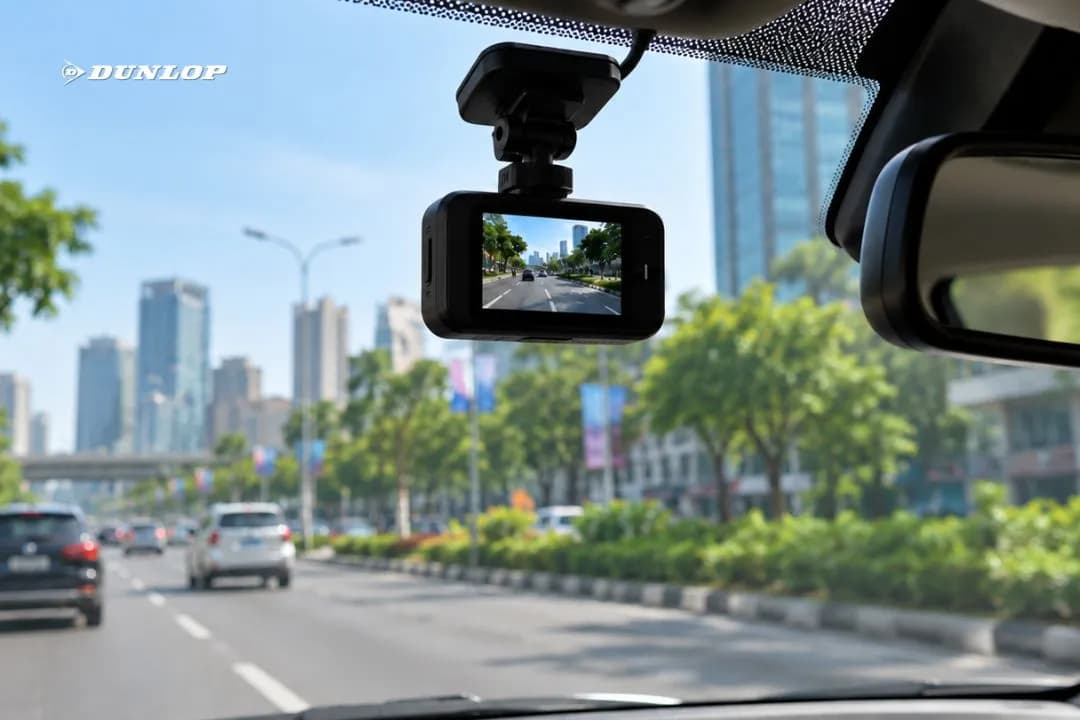
Imagine you are stopped at a red light when the vehicle behind you hits your rear bumper. But the other driver insists that your car rolled backwards. With no witnesses and no footage, disputes like this can drag on for a long time and often end in a settlement that hurts the party who was not actually at fault. Situations like this are one of the reasons more and more drivers are installing car dashcams.
The problem is that most drivers only install a dashcam after an incident has already happened. Yet this device is most useful before anything goes wrong, as evidence that is ready whenever you need it and as a way to prevent disputes from the start. A camera installed the day after an incident cannot help with what happened yesterday.
The chance of being involved in a road incident is not small either. Korlantas Polri (the Indonesian National Police Traffic Corps) recorded 141,608 traffic accidents throughout 2025, down about 6 percent from the previous year. Although the trend is improving, that figure still means almost 400 incidents every day. And it does not include minor bumps that are settled on the spot and never make it into official records.
There is also a fairly common misconception that dashcams are only needed by people who often drive out of town or use toll roads. In reality, many incidents happen close to home: pulling out of a convenience store car park, at a junction in a housing complex, or while the car is left for a few hours in a mall car park. Small incidents like these are the ones most likely to end without a clear resolution, because nobody saw what happened.
That said, buying a dashcam is not as simple as picking the one with the highest resolution. A 4K camera with a mediocre sensor can produce worse night footage than a Full HD camera with a good sensor. A poor mounting position can make number plates unreadable, and a randomly chosen microSD card can fail just when you need an important recording. That is why the guide below is set out in order, from functions, types and features to how to choose, installation and looking after your recordings.
Underrated Functions of a Car Dashcam
Before looking at devices, it helps to understand what a dashcam can actually do. This will help you decide which features you really need and which are just extras.
Objective Evidence in an Accident
Footage shows the full sequence of events, from vehicle positions and the colour of the traffic light to the direction other vehicles came from. Evidence like this is very helpful when filing a police report or making an insurance claim, as both usually ask for a clear account of what happened.
Preventing Disputes and Scams
The "deliberate collision" scam used to demand compensation still happens in several cities. A camera that is visible from outside the windscreen is often enough to make scammers think twice. And if an incident still happens, the footage puts you in a much stronger position.
Monitoring Your Car While Parked
With parking mode, a dashcam keeps working even after the engine is switched off. Scratches from minor bumps, hit-and-runs in car parks or attempted vandalism can still be recorded even when you are nowhere near the car.
Reviewing Your Driving
Trip footage can also act as a mirror. It reveals habits you may not notice, such as following the car in front too closely or braking too late. For fleet owners, the footage helps monitor how drivers handle their vehicles.
Types of Car Dashcams: Single Channel, Dual Channel and Mirror
Once the functions are clear, the first decision is how much area you want to record. This is what sets each type of dashcam apart.
Single Channel
This type has just one camera facing forward. It is the most affordable and the simplest to install, making it suitable for everyday city driving. Its limitation is also obvious: anything that happens behind the car is not recorded at all.
Dual Channel (Front and Rear Car Cameras)
The dual channel type closes that gap. Rear-end collisions in traffic jams or at red lights are among the most common incidents, and front and rear car cameras record both sides at the same time. Some models even include a cabin camera, which is relevant for ride-hailing cars or company vehicles.
Mirror Dashcam
This type looks like a rear-view mirror and is mounted over the existing one. Its wide screen can display the rear camera feed, which is helpful when the boot is full and the rear window is blocked by luggage. However, a screen that is too bright at night can be distracting. Adjust the brightness or switch the screen off when you do not need it.
Key Dashcam Features to Check Before Buying
The type of device determines recording coverage, while the features determine whether the footage is good enough to use as evidence. Several features should be on your priority list.
Dashcam Resolution
Resolution directly affects whether number plates can be read. However, higher resolution also means larger files, so you will need more memory capacity.
Full HD (1080p): This is the minimum worth choosing today. Number plates are still readable at close range, and file sizes are relatively small.
2K (1440p): This resolution is the ideal middle ground. It captures sharper detail of fast-moving vehicles on toll roads without filling up the memory too quickly.
4K (2160p): It delivers the sharpest image, but needs a large memory card and a capable processor so the device does not overheat. Pay attention to the frame rate as well. Footage at 60 fps is smoother when capturing fast-moving objects than 30 fps. In the end, lens and sensor quality matter more than the resolution figure on the box.
Night Vision
If you often drive home late or travel on poorly lit roads, this is a feature you should not compromise on. Besides sensor quality, look for WDR or HDR features that balance bright and dark areas. They make a real difference when headlights from oncoming vehicles shine directly into the lens.
Loop Recording
Loop recording makes the camera automatically overwrite the oldest files when the memory is full. Recording never stops, and you do not need to delete footage manually.
G-Sensor
The G-sensor detects impacts or sudden braking, then locks the recording from that moment so it is not overwritten by loop recording. Make sure its sensitivity can be adjusted. If it is too sensitive, even potholes will be treated as impacts, and the memory will quickly fill up with locked files.
Parking Mode
Parking dashcams generally offer two ways of working. Time-lapse mode records continuously at a low frame rate to save memory, while motion detection and impact detection only start recording when there is movement or an impact around the car. This feature needs a power source that stays on when the engine is off, which is covered in the installation section.
GPS, Wi-Fi and Supercapacitor
GPS records the vehicle's location and speed as supporting data for the footage. Wi-Fi lets you view and download videos through a smartphone app without removing the microSD card. For backup power, a supercapacitor is generally recommended over a regular battery because it handles high cabin temperatures better and lasts longer. This matters in Indonesia, where cars are often parked under the blazing sun.
How to Choose the Best Car Dashcam for Your Needs
Now that you know the types and features, only one question remains: which one suits you best? The best car dashcam can differ from person to person, depending on how the car is used every day.
If your car is mostly used for commuting within the city, a Full HD single channel dashcam with a G-sensor and loop recording is enough. Any remaining budget is better spent on a quality microSD card than on chasing 4K resolution.
It is a different story if you regularly drive out of town or use toll roads. Higher speeds and more varied traffic make a dual channel dashcam with at least 2K resolution and GPS the more sensible choice.
Cars that are often left in public places, such as shopping centres, offices or by the roadside, should use a dashcam with a reliable parking mode and a hardwire kit. Meanwhile, company vehicles or ride-hailing cars will be better protected with an additional cabin camera.
Whatever you choose, make sure the device comes with an official warranty and clear after-sales service. A dashcam that has stopped working without you noticing is no better than not having one at all.
How to Install a Dashcam for the Best Recording
A good device can lose its usefulness if it is installed carelessly. There are four things to pay attention to during installation.
Choose the Camera Position
The ideal position for the front camera is behind the rear-view mirror, slightly below the top edge of the windscreen and still within the wiper sweep area. This keeps the driver's view clear while the glass in front of the lens stays clean when it rains. Avoid placing the lens behind very dark window tint, as night footage quality will suffer. The rear camera can simply be mounted at the top centre of the rear window.
Choose the Right Power Source
The most convenient option is to plug the adapter into the cigarette lighter socket. However, if you want to use parking mode, you will need a hardwire kit connected directly to the fuse box so the dashcam still gets power when the engine is off. Choose a hardwire kit with a low voltage cut-off feature so the car battery does not go flat. If you are not familiar with car electrics, leave the installation to a technician.
Tidy Up the Cables
Tuck the cable into the gap along the headliner, then run it down the A-pillar. Make sure the cable does not cross in front of the airbag module in the pillar, as it could interfere with the airbag when it deploys.
Set Up and Test
Once installed, set the date and time accurately, as this information is an important part of the recording. Angle the camera so the road takes up more of the frame than the sky, then take a short drive to make sure it is recording normally and the image is not blurry.
Looking After Your MicroSD Card and Recordings
Many owners think the job is done once the dashcam is installed. Yet the microSD card is the component that works the hardest. It is constantly written and overwritten every time the car is switched on, which is far more demanding than the memory card in your phone.
That is why you should choose a microSD card with a speed class of at least U3 or V30 and a capacity of at least 64 GB. Cards labelled high endurance are designed specifically for continuous recording, so they last longer.
Reformat the card through the dashcam menu about once a month to prevent corrupted files. Whenever an incident occurs, move the important footage to your phone or computer right away before it gets overwritten. Replace the microSD card regularly, for example every one to two years, or sooner if the device starts showing error messages. Also clean the lens regularly with a microfibre cloth, as dust and fingerprints can make footage look hazy.
Frequently Asked Questions About Dashcams
Can dashcam footage be used as evidence?
Dashcam footage counts as electronic information that can be submitted as supporting evidence, both when reporting to the police and when making an insurance claim. The final assessment still rests with the relevant authorities. So keep the original file unedited and make sure the date and time are accurate.
Does parking mode drain the car battery quickly?
The risk does exist if the dashcam is connected directly to the battery without protection. With a hardwire kit that has a low voltage cut-off, the device will switch off automatically before the battery voltage drops too low.
How long is footage stored?
It depends on the resolution, number of cameras and compression level of each device. As a rough guide, a 64 GB microSD card can hold several hours of Full HD footage from a single camera before loop recording starts overwriting old files.
Conclusion
A car dashcam is a small investment that can save you from a long dispute. Start by choosing the type of device that suits your driving pattern. Then make sure it has the key features, such as adequate resolution, night vision, loop recording, a G-sensor and parking mode. Mount it in the right position and look after the microSD card regularly so your footage is always ready when you need it.
Keep in mind, though, that driving safety also depends on your vehicle's condition, especially the tyres, which are the only part of the car in direct contact with the road. So round off your preparation by reading our tips on improving road safety and how to choose car tyres based on your driving style.
For sedan, city car and MPV owners, Dunlop SP Touring R1 can be the right companion for everyday driving. This tyre is designed for on-road use, with standard comfort, good durability and a sporty design. Its rounded tread profile helps keep contact with the road more even, while its grooves clear water efficiently for better performance on wet roads.