

When Should You Replace Your Tires? Important Signs to Look Out For

Car tires are one of the most crucial components of your vehicle. They not only support the car’s movement but also play a major role in safety, comfort, and driving efficiency. Worn-out or damaged tires can lead to serious problems, from accidents due to loss of control to increased fuel consumption caused by improper friction. Therefore, recognizing when it’s time to replace your tires is essential for every vehicle owner.
Timely tire replacement is not just about maintaining vehicle performance but also about protecting yourself and your passengers from potential road risks. Well-maintained tires provide optimal grip, reduce the risk of skidding, and ensure a safe and comfortable driving experience. So, how do you know when it’s time to replace your car tires? Here are the key signs to watch for.
Signs You Need to Replace Your Car Tires
- Tread Thickness Reaches the TWI Limit
The tread depth can be measured using the Tread Wear Indicator (TWI), located between the tire grooves. If the tread depth has reached the TWI, it means the tire no longer provides optimal grip and needs to be replaced. - Mileage Exceeds 40,000 km
It is recommended to replace tires once they have traveled more than 40,000 km. Tires generally experience significant wear, which can affect performance and safety. - Visible Physical Damage to the Tires
Cracks, tears, or bulges in the tires indicate internal structural damage. These conditions increase the risk of tire blowouts, which can be dangerous for drivers. - Frequent Loss of Air Pressure
If a tire continuously loses air pressure without an obvious cause, it could be due to a slow leak or damage to the tire walls. It is best to inspect and replace the tire to prevent further risks. - Uneven Tire Wear
Heel & toe wear refers to uneven wear on the tire, where the front and rear tread have different thicknesses. This often results from hard braking or poor road conditions. Tires in this condition should be replaced.
How to Properly Change a Car Tire
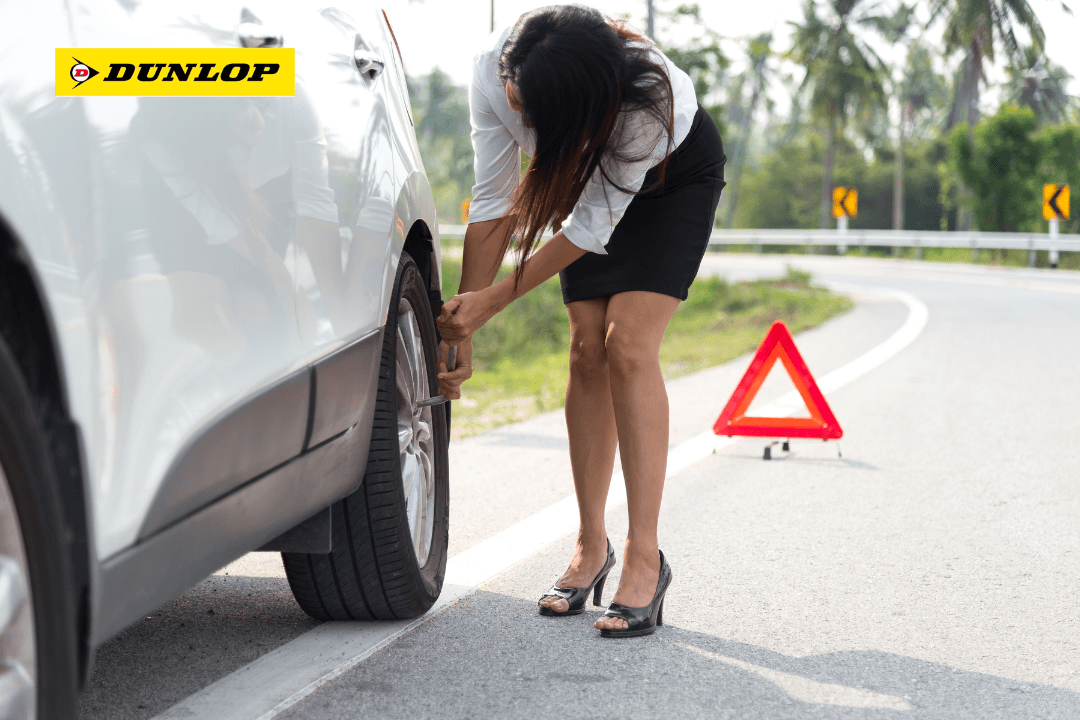
Besides knowing when to replace your car tires, understanding how to change them is equally important. In emergency situations, such as a flat tire on the road, this knowledge can help you stay safe and continue your journey without major issues. Here are the steps to change a car tire correctly:
- Prepare the Necessary Tools
Before you start, make sure you have the following tools:- A spare tire in good condition
- A car jack
- A lug wrench
- Protective gloves (for safety and to keep your hands clean)
- A warning triangle to alert other drivers
- Park in a Safe Location
If you need to change a tire on the road, choose a flat area away from traffic. Turn on your hazard lights and place the warning triangle behind your vehicle to alert other drivers. - Loosen the Lug Nuts
Before using the jack, loosen the lug nuts using the wrench. Do not remove them completely yet—just loosen them for easier removal later. - Lift the Car with the Jack
Position the jack at the designated lifting point recommended by the car manufacturer (usually near the tire being changed). Raise the car until the problematic tire is a few centimeters off the ground. - Remove the Lug Nuts and Old Tire
Once the car is lifted, completely remove the lug nuts and take off the damaged tire. Keep the lug nuts in a safe place to avoid losing them. - Install the Spare Tire
Align the spare tire with the wheel hub and ensure the lug holes match the bolts on the vehicle. - Secure and Tighten the Lug Nuts
First, hand-tighten the lug nuts, then use the wrench to tighten them in a crisscross pattern to ensure even pressure. - Lower the Car and Check Lug Nut Tightness
Slowly lower the car until the tire fully touches the ground. Use the wrench to confirm all lug nuts are securely tightened. - Store the Tools and Old Tire
After replacing the tire, store all tools back in the car and place the damaged tire in a safe spot for transport to a repair shop.
Additional Tips
- Check the air pressure in your spare tire before using it.
- If your spare tire is a temporary spare (also called a donut tire), remember that it is designed for short distances and low speeds. Replace it with a new tire as soon as possible at the nearest repair shop.
By understanding these steps, you can confidently handle emergency situations on the road. Always prioritize safety when changing a tire and ensure you have a spare tire and necessary tools available.
If you use Dunlop tires, you can have peace of mind knowing they are designed for high durability and reliability in various road conditions.
Tire Maintenance Tips for Optimal Performance
- Maintain Proper Air Pressure
The correct air pressure ensures that tires do not wear out quickly and supports vehicle fuel efficiency. Check the air pressure regularly, especially before long trips. - Rotate Tires Regularly
Rotating tires every 5,000 - 8,000 km helps prevent uneven wear and can extend tire life by up to 20%. - Avoid Overloading
Carrying excessive weight can damage the tire structure and increase the risk of a blowout. - Choose High-Quality Tires
Use trusted brands like Dunlop, known for their performance, durability, and optimal safety.
FAQ: Common Questions About Car Tires
What is a Tread Wear Indicator (TWI)?
TWI is a small line between the tire grooves that indicates the tread wear limit. If the tread is level with this line, the tire needs to be replaced for safe driving. The TWI height is 1.6mm.
How Long is the Ideal Tire Lifespan?
The ideal tire lifespan is around 4-5 years, depending on usage and road conditions. Additionally, check the mileage—if it exceeds 40,000 km, inspect the TWI again!
Should Tires Be Replaced in Pairs?
It is recommended to replace tires in pairs (either both front or both rear) to maintain vehicle balance and stability.
How to Choose the Right Tires?
Select tires according to the specifications recommended in your vehicle’s manual. Dunlop offers a variety of options to suit your vehicle's needs.
Conclusion

Replacing car tires on time and performing regular maintenance are essential steps to ensure driving safety and comfort. Recognize the signs that indicate when to replace your tires, follow regular maintenance routines, and use high-quality tires like Dunlop for optimal performance.
Before long trips, always check your tires’ condition.
Explore Dunlop’s latest tire collection and find the best option for your vehicle at dunlop.co.id.