

Get to know the 3 Best Car Tire Rotation Techniques Correctly
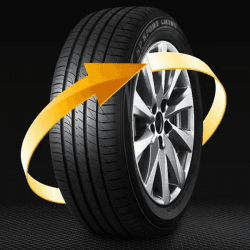
Tyre rotation is an important part of vehicle maintenance. Despite the benefits of rotating car tires for driving efficiency, there are still many car owners who ignore this maintenance. In fact, regularly rotating tires can maximize tire durability, improve vehicle performance, and ensure the safety of drivers and passengers. In this article, we will discuss why the best car tires need to be rotated and how to do it correctly. You can also get to know the three best tire rotation techniques according to the type of car drive: FWD (Front Wheel Drive), RWD (Rear Wheel Drive), and AWD (All Wheel Drive).
Understanding and Benefits of Tire Rotation
What is Tire Rotation?
Tyre rotation is the process of moving tires from one position to another on a vehicle to ensure that all tires wear evenly. Tire wear patterns can vary depending on many factors, including the car's drive type, driving style, and road conditions. By moving the tire position periodically, we can optimize tire performance.
Benefits of Tire Rotation
-
Improves Vehicle Performance: Well-maintained tires provide better traction, which means improved handling and driving comfort.
-
Reduces Risk: Tires that wear unevenly can cause problems such as aquaplaning or sudden loss of traction, which can be dangerous especially in wet or slippery road conditions.
Tire Rotation Technique for FWD (Front Wheel Drive)
Front-wheel drive (FWD) cars are the most common type of car on the road today. In FWD cars, the engine drives the front wheels, which means the front tires tend to wear more quickly than the rear tires.
Rotation Pattern for FWD
For FWD cars, the most common rotation pattern is:
-
Front to Rear Tires (Parallel): The front tires are moved to the rear position on the same side.
-
Rear Tires to Front (Cross): The rear tires are moved to the front position and crossed (for example, left rear tire to right front and right rear tire to left front).
Tire Rotation Technique for RWD (Rear Wheel Drive)
Rear-wheel drive (RWD) cars are often used in sports cars and several types of SUVs and trucks. In RWD cars, the engine drives the rear wheels, so the rear tires tend to wear more quickly than the front tires.
Rotation Pattern for RWD
For RWD cars, the most common rotation pattern is:
-
Rear Tires to Front (Parallel): The rear tires are moved to the front position on the same side.
-
Front to Rear Tires (Cross): The front tires are moved to the rear position and crossed (for example, left front tire to right rear and right front tire to left rear).
Tire Rotation Technique for AWD (All Wheel Drive)
Cars with all-wheel drive (AWD) have a more complex system because engine power is distributed to all four wheels. This makes the tire wear pattern on AWD cars tend to be more even than on FWD or RWD. However, this type still requires regular rotation.
Rotation Pattern for AWD
For AWD cars, the most common rotation pattern is:
-
Front to Rear Tires (Cross): The front tires are moved to the rear position and crossed (for example, left front tire to right rear and right front tire to left rear).
-
Rear Tires to Front (Cross): The rear tires are moved to the front position and crossed (for example, left rear tire to right front and right rear tire to left front).
Steps to Rotate Tires
Car Lift
Use a jack to lift one side of the car. Make sure the car is parked on a flat surface, then lift the car using a jack that matches the car's specifications.
Remove Tire
Loosen and remove the wheel nuts, then remove the tire from the car.
Move Tires
Move the tires with a rotation pattern that suits the type of wheel drive on your car, according to the information above, namely: front to rear tires (parallel) and rear tires to front (cross) for FWD cars; rear to front tires (parallel) and front to rear tires (cross) for RWD cars; as well as front to rear tires (cross) and rear tires to front (cross) for AWD cars.
Reinstall the Tire
Reinstall the tire in the new position and tighten the wheel nuts by hand first.
Lower the Car
Lower the car and tighten the wheel nuts with the wrench until tight.
Additional Tips for AWD Tire Rotation
Check Tire Pressure
Make sure the tire pressure meets the manufacturer's recommendations before and after rotation.
Perform Tire Balancing
The tire balance may change after rotation, so it is recommended to carry out balancing if necessary.
Pay attention to tire wear
If one tire appears to be wearing faster than the others, there may be a suspension or alignment problem that needs to be checked.
The Right Time to Rotate Tires
Tyre rotation should be done every 5,000 to 8,000 kilometers or according to the car manufacturer's recommendations. Apart from mileage, other conditions that can be an indication for tire rotation are:
Uneven Wear
If you see uneven wear on one of the tires, rotate it immediately.
After a Long Journey
After a long trip with a heavy load, such as going home or on a family holiday, tire rotation can help maintain the condition of the tires.
Tyre rotation is an important maintenance step that can be done regularly. This can improve vehicle performance and improve driving safety. Although the type of car drive affects the rotation pattern that must be performed, the basic principle remains the same: move the tires to ensure even wear.
For FWD, RWD and AWD cars, the correct rotation pattern will help maintain tire condition and vehicle performance. By understanding and applying correct rotation techniques, we ensure a safe and comfortable ride. Don't forget to check tire pressure, tire balance and signs of uneven wear regularly, as part of realizing driving efficiency in your daily life.
Another part of driving efficiency is ensuring that the tires installed on your vehicle are the best car tires, such as Dunlop tires. Dunlop tires present the SP Sport LM705 type. This tire has a more flexible sidewall profile, so it can absorb shock from road conditions more effectively. Then, with Shinobi Technology the new rounded tread profile is able to reduce tire vibrations, especially on bumpy roads. You can also experience a better level of comfort and silence.

For those of you who always travel, Dunlop is the world's best quality car tire as a partner for your vehicle. Dunlop always offers a wide selection of tires to suit your vehicle type: cars, motorbikes, buses and trucks. Find a variety of the latest information from Dunlop, tips, car tire recommendations, and information about vehicles and the community on the website and Dunlop Tire Indonesia's official social media.
oOo
Source(s):