

Why do the best motorbike tires have different sizes at the front and rear?
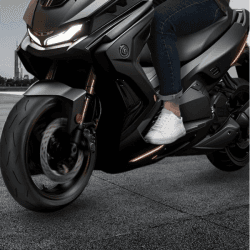
In the automotive world, especially motorbikes, choosing the best motorbike tires is an important aspect that influences driving performance and safety. Motorcycle tires come in various sizes and types, adapted to various needs and road conditions. One thing that is often a concern is the difference in front and rear tire sizes.
For motorbike riders, of course some already know that front and rear motorbike tires have different sizes. However, for ordinary people, maybe they only know about it now. This difference certainly has a purpose that affects driving performance and safety. This article will thoroughly examine the technical and practical reasons behind the differences in tire sizes.
Function and Role of Front and Rear Tires
Before getting into the technical reasons, it is important to understand the role and function of each tire. The front and rear tires have different and important tasks in the overall dynamics of the motorbike.
Front Tire
The front tire is responsible for controlling the direction of the motorcycle. It must be able to maintain grip when turning or maneuvering, and provide good stability and control when the rider changes direction. The front tire also plays a crucial role in braking. When the rider brakes, most of the weight will shift to the front, so the front tire must be able to handle this additional load and provide enough traction to stop the bike safely. Apart from that, the front tires also function to break up water when driving in rainy conditions, or when passing through puddles.
Rear Tire
On the other hand, the rear tire acts as a support for the engine's torque when driving the motorbike. This tire functions as a transmitter of power from the engine to the road and allows the motorbike to move forward. The rear tire also helps maintain the stability of the motorbike when driving straight or at high speed.
Apart from that, the rear tire must be able to support the weight of the entire motorbike, rider and other luggage, as well as provide sufficient traction during acceleration and braking.
Technical Reasons Behind Differences in Tire Sizes
After understanding the role of each tire, we can look at the technical reasons why the front and rear tires are different sizes.
-
Load Distribution
One of the main reasons for the difference in front and rear tire sizes is for load distribution. When a motorbike is at rest, the load is usually distributed almost evenly between the front and rear tires. However, when the motorbike is moving, especially when accelerating or braking, the load distribution changes significantly.
During acceleration, more load will be on the rear tires, while during braking, more load will be on the front tires. Therefore, the rear tires are often wider to handle the additional load during acceleration, while the front tires are slimmer to provide control and stability during braking.
In addition, the front tire is designed with a softer construction, while the rear tire has a stronger layer to support the weight of the motorbike and is resistant to friction with asphalt.
Traction and Grip
Traction or grip is a key factor in the best performance of motorbike tires. The wider rear tire provides a larger contact surface with the road, thereby providing better traction during acceleration.
This is especially important for high-performance motorbikes that require maximum traction to avoid slippage and ensure optimal acceleration. Meanwhile, the narrower front tire is designed to provide sufficient grip when braking and in cornering conditions, without sacrificing maneuverability.
Aerodynamics
Aerodynamic aspects also play an important role in the design of the best motorbike tires. The narrower front tire helps reduce air resistance, allowing the bike to ride more efficiently. At high speeds, any element that can reduce air resistance will provide advantages in terms of speed and fuel efficiency.
Stability and Maneuverability
Stability and maneuverability are two other critical aspects in tire design. The smaller front tire helps improve the bike's maneuverability, allowing the rider to take corners with more precision and responsiveness. On the other hand, a wider rear tire helps improve stability, especially when driving straight or at high speed.
Influence on Motorcycle Type
The difference in front and rear tire sizes can also be seen on various types of motorbikes, from sports motorbikes, touring motorbikes, to off-road motorbikes.
Motorcycle Sport
On sport motorbikes, the difference in front and rear tire sizes is very obvious. The rear tire is usually wider to handle the large engine power and provide maximum traction during acceleration. Meanwhile, the slimmer front tire helps provide precise control when cornering at high speed.
Motorcycles Touring
On a touring motorbike, comfort and stability are the main priorities. Wider rear tires help in bearing the additional weight of luggage and passengers. The smaller front tire helps in providing sufficient maneuverability for long journeys that often involve varying road conditions.
Motorcycle Off-Road
Off-road motorbikes have very different tire designs. The wide rear tire helps in providing traction on various terrains such as mud, sand and rocks. The narrower front tire is designed to provide better control over uneven terrain and allows the rider to steer the bike with more precision.
Advantages of Different Tire Sizes
As with every aspect of design, different front and rear tire sizes have their advantages.
Advantages
-
Better Traction: Wider rear tires provide better traction, especially during acceleration.
-
Better Control: Narrower front tires help in providing better control during braking and cornering.
-
Aerodynamic Efficiency: Smaller front tires help reduce air resistance, increasing fuel efficiency.
-
Higher Stability: Wider rear tires help increase the bike's stability, especially at high speeds.
The difference in front and rear tire sizes on motorbikes is the result of various technical and practical considerations designed to provide the best performance, stability and safety for the rider. Load distribution, traction, aerodynamics, as well as stability and maneuverability are the main factors that influence this design, making this design the optimal choice for various types of motorcycles.
By understanding the reasons behind these different tire sizes, riders can better appreciate the complexity and craftsmanship involved in motorcycle design, and can choose the best motorcycle tires for their vehicle.
Not only do you need to pay attention to the size of the motorbike tires according to their function, you also need to ensure the safety and comfort of driving from the quality of the tires used. Dunlop presents the TT93GP which is one of the best sport tires in its class.
These Dunlop tires are made with a special compound that provides high traction in various road conditions, both dry and wet. This allows the rider to maneuver safely and confidently, even on sharp turns and slippery roads. In addition, the Dunlop TT93GP is designed with an optimal tread pattern to provide perfect traction when cornering and accompanied by exceptional stability. This helps the rider to maintain optimal control, even on uneven road surfaces.

Dunlop provides world quality tires and is the best partner for your vehicle. Experience the optimal driving experience with Dunlop with a variety of tire choices according to your vehicle type, starting from cars, motorbikes, buses, to trucks. Find a variety of the latest information from Dunlop, tips, tire recommendations, and information about vehicles and the community on the website and Dunlop Indonesia's official social media.
oOo
Reference(s):
https://planetban.com/blog/mengapa-ukuran-ban-sepeda-motor-depan-dan-hind-berbeda
https://astraotoshop.com/article/roda-depan-vs-roda-hind-mengcepat-besar-ban-motor