

Master Three Useful Braking Techniques
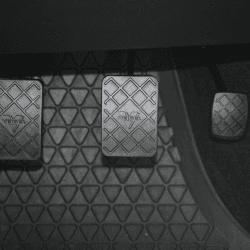
Driving skills need to be further improved for driving safety. One thing that must be mastered well is braking technique. It turns out there are three techniques that can be used for different situations.
Driving a car is not just about playing with the gas pedal, clutch, or just braking. There are proper techniques. This needs to be understood so that the guarantee of always being safe on the road increases.
One thing that needs to be mastered is braking techniques. Understanding and mastering it well is very helpful when facing several crucial situations. Apart from that, proper braking techniques also enable the driver to control and stop the vehicle perfectly. As a result, the vehicle will be safer for yourself and others
So, what braking techniques do you need to master? These are three braking techniques for non-Anti Lock Braking System (ABS) cars.
You need to know this technique because, unlike cars with ABS which are able to keep the wheels from stopping suddenly while the car is still moving and suddenly braked, non-ABS cars can experience a condition where the brake linings are locked or clamped for too long. This is very dangerous because the driver can lose control of the vehicle.
Stab Technique
One of the braking techniques that needs to be mastered. Through this technique, the driver can reduce the vehicle's speed and prevent the car tires from locking, which is very vital.
To do this, the driver presses the brake pedal, releases it, and presses it again in quick succession. This movement can be done repeatedly until the vehicle slows down to the desired speed.
The stab technique is very useful in cars with braking systems that use drum brakes or drums. However, this technique is not easy to master. Therefore, it is recommended to be accompanied by an expert when you want to train it.
Squeeze Technique
Another braking technique that must be mastered is the squeeze technique. This technique is very useful when driving a car without an ABS feature.
The way to practice it is very easy. The brake pedal is pressed, released, and pressed again repeatedly. At first glance, it is similar to the stab technique. However, what makes the difference is the speed of moving from pressing to releasing the brake pedal. In the squeeze technique, the driver is expected to do it slowly, in contrast to the stab technique.
Threshold Technique
The final technique that needs to be mastered when braking with a non-ABS car is the threshold technique. This technique aims to prevent the car tires from locking so that they can still be turned when braking.
The way to practice this is by pressing the brake pedal while floating. This means that the driver does not step on it one hundred percent, but only about 90 percent. Thus, there is still 10 percent of the brakes remaining that are not stepped on.
This technique is useful for avoiding locked car tires. As a result, the car's speed is reduced and the car can still be controlled properly.
Those are three braking techniques that are useful for non-ABS cars. Balance all these techniques with engine braking and downshifting when the car's speed starts to decrease. With this, braking will be optimal and the car will always be under control.
Also make sure the tires are always in prime condition for optimal braking. This can be achieved by using quality tires. So, use trusted Dunlop tires. Dunlop tires are guaranteed to provide strong grip on the road surface which is important for driving safety.