

Understanding AWD, FWD, and RWD Drive Systems: Which One is Most Suitable for You?
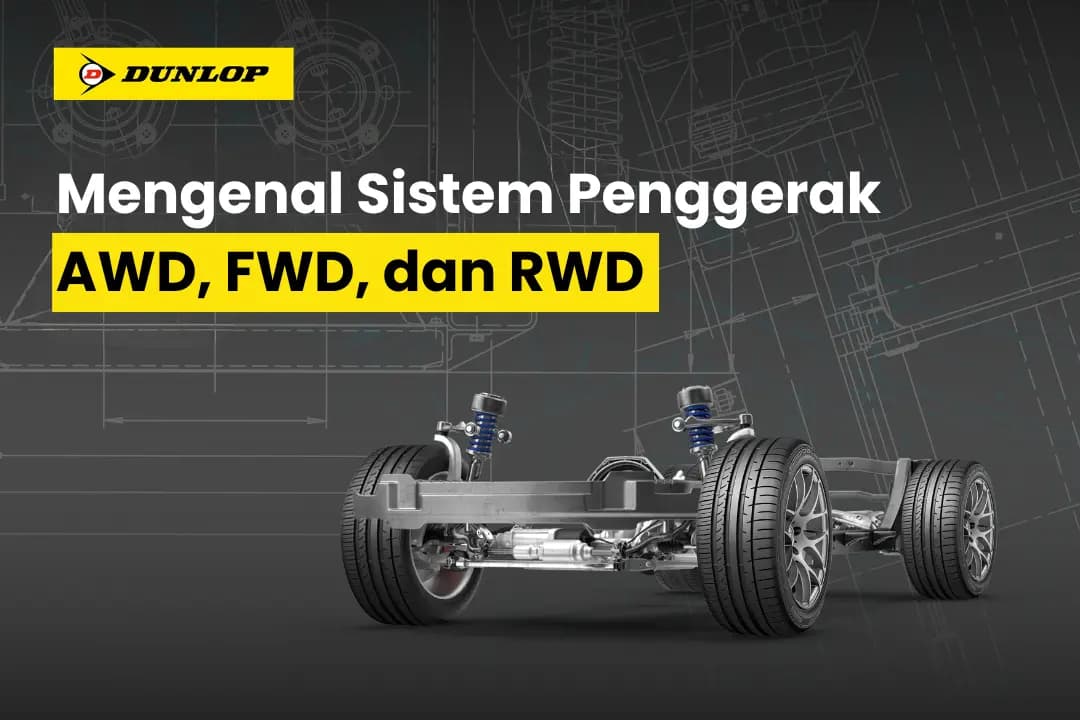
In the automotive world, the vehicle drivetrain system is one of the most important aspects that is often not well understood by vehicle owners. Many people may have heard the terms AWD (All-Wheel Drive), FWD (Front-Wheel Drive), and RWD (Rear-Wheel Drive), but they do not fully understand the differences, benefits, and how to choose the right type of tires that match their drive system. This article will thoroughly discuss these three systems with easy-to-understand explanations, along with tips for choosing the right tires and recommendations for the best tires to support your vehicle's performance.
What Is a Vehicle Drivetrain System?
The drivetrain is the way power from the engine is transmitted to the wheels to move the vehicle. The difference between AWD, FWD, and RWD lies in which wheels receive the engine power, as well as how that power distribution is managed under various road conditions.
FWD (Front-Wheel Drive)
FWD is a drivetrain system where power from the engine is directly transmitted to the front wheels. This is the system most commonly used in modern passenger cars, primarily due to its efficiency in fuel consumption and lower production costs.
Advantages of FWD:
- Efficient in fuel consumption
- Lower maintenance costs compared to RWD and AWD
- Wider cabin space because there is no need for components to drive the rear wheels
Disadvantages of FWD:
- Less stable during high acceleration
- Understeer when maneuvering at high speeds
RWD (Rear-Wheel Drive)
In the RWD system, power is transmitted to the rear wheels. This system is widely used in sports cars, commercial vehicles, and high-performance cars.
Advantages of RWD:
- More balanced weight distribution
- More stable for acceleration
- Suitable for towing or carrying heavy loads
Disadvantages of RWD:
- Higher maintenance costs compared to FWD
- Requires more space for the transmission
AWD (All-Wheel Drive)
AWD is a drive system where all four wheels receive power from the engine simultaneously, either permanently or as needed. This system is widely used in SUVs and crossover vehicles due to its ability to traverse various terrains.
Advantages of AWD:
- Excellent traction in various road conditions
- Stable on slippery surfaces, such as rain or snow
- Increases driving comfort and safety
Disadvantages of AWD:
- Higher fuel consumption
- More expensive maintenance and repairs
Differences Between AWD, FWD, and RWD
Vehicle drivetrain systems are generally divided into three main types: FWD (Front-Wheel Drive), RWD (Rear-Wheel Drive), and AWD (All-Wheel Drive).
- FWD delivers engine power to the front wheels. It is highly fuel-efficient and cost-effective to maintain, making it ideal for everyday passenger vehicles. However, it offers less traction on wet roads and may experience understeer at higher speeds.
- RWD sends power to the rear wheels. It provides better weight distribution and greater stability during acceleration, which is why it’s commonly used in sports cars and commercial vehicles. On the downside, its fuel efficiency is moderate and maintenance costs are generally higher.
- AWD distributes power to both front and rear wheels , either permanently or when needed. This system offers the best traction on various road conditions and ensures stability on slippery surfaces, making it perfect for SUVs, crossovers, and challenging terrains. However, it consumes more fuel and requires more expensive maintenance.
Tires Suitable for Each Drivetrain System
Tires for FWD & RWD
Both FWD (Front-Wheel Drive) and RWD (Rear-Wheel Drive) vehicles have different tire needs depending on the position of the drivetrain. For both types, it is important to choose tires that match the vehicle's usage pattern, daily needs, and the road conditions frequently encountered.
Generally, use tires with high grip on the drive wheels to enhance comfort and stability.
Tires for AWD
Using tires of uneven sizes can cause damage to the AWD system. Therefore, it is important to use all four tires of the same size and type, and to ensure even wear.
Tire Rotation Based on Drive System
Tire rotation involves moving the position of the tires to ensure even wear. This is important to maintain comfort, stability, and extend the lifespan of the tires. It is recommended to be done every 10,000 km, with the rotation pattern adjusted based on the vehicle's drive system: FWD, RWD, or AWD. The complete guide can be seen below.
1. Tire Rotation for FWD (Front-Wheel Drive)

Characteristics:
Power is transmitted to the front wheels. The front tires wear out faster because they are the drive responsible for traction and steering.
Recommended Rotation Pattern:
- Front tires are moved to the back in a straight line (right front → right back).
- Back tires are moved to the front in a cross pattern (left back → right front).
2. Tire Rotation for RWD (Rear-Wheel Drive)

Characteristics:
Power is transmitted to the rear wheels. The rear tires tend to wear out faster because they are the driving force that bears the acceleration load.
Recommended Rotation Pattern:
- The rear tires are moved to the front in a straight line (right rear → right front).
- The front tires are moved to the back in a cross pattern (left front → right rear).
3. Tire Rotation for AWD (All-Wheel Drive)

Characteristics:
All four wheels receive power from the engine, so wear can occur more evenly. However, the difference in tire sizes between the front and rear tires can damage the AWD system.
Recommended Rotation Pattern:
- Cross-rotation of all four tires (left front → right rear, right front → left rear).
Tire Recommendations for AWD, FWD, and RWD Vehicles
Choosing the right tires based on the vehicle's drive system is not just about comfort, but also concerns the safety and overall performance of the vehicle. Here are some product recommendations that can be used according to the drive system:
1. Tires for AWD Vehicles
Recommendation:
- Grandtrek AT5

Suitable for SUVs and crossovers with an AWD drivetrain. Provides optimal traction and stable performance on both wet and dry terrain.
- SP Sport Maxx 050+

Designed for premium AWD vehicles that require high stability at high speeds and maximum comfort.
- Falken Azenis FK520L

Precision control that ensures stability and maximum control at various speeds. Provides a greater sense of safety, with good braking performance on both wet and dry road conditions.
2. Tires for FWD and RWD Vehicles
Recommendation:
- SP Sport LM705

Offering comfort and stability during long-distance driving. The right choice for RWD and FWD vehicles used on highways and toll roads.
- Falken Ziex ZE310R Ecorun

Provides the perfect combination of driving comfort, precise handling, and fuel efficiency. Equipped with Advanced 4D Nano Design technology and Adaptive Constant Pressure Pattern for optimal grip and longer lifespan.
- Enasave EC300+

Ideal for daily passenger cars, with low rolling resistance for fuel efficiency without sacrificing comfort and grip on wet roads.
Find various top tire variants at Dunlop Indonesia and match them to your vehicle's needs. Consult with an official Dunlop dealer to get the best options based on your vehicle's drive system.
Conclusion
Understanding the vehicle's drivetrain—whether FWD, RWD, or AWD—is an important step in maintaining driving comfort, efficiency, and safety. Each system has different characteristics and needs, both in terms of performance and tire selection. Therefore, it is important for vehicle owners to recognize the type of drivetrain they have and choose tires that are suitable for their daily usage conditions. From the fuel efficiency of FWD vehicles, the acceleration power of RWD vehicles, to the maximum stability of AWD vehicles, all can be optimally supported by using the right tires. The right tires not only enhance performance but also provide a better driving experience.
This is where the role of quality tires becomes very important to ensure that every type of vehicle operates optimally according to its drive system.