

Self Parking Technology Makes Parking Easier
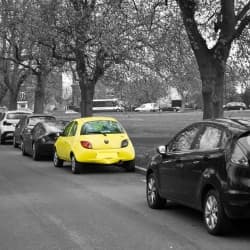
Parking your vehicle properly is not a trivial matter. Especially if you are in a big, crowded city. Narrow parking areas will make things difficult. Luckily, self-parking technology is now starting to be developed which can make everything easier.
For some people, parking a vehicle can be a hassle. The limited parking area means drivers have to be skilled at maneuvering so that the car is parked properly. The challenge will feel even more difficult when you have to park the vehicle in parallel. It takes special skills to do it.
This is the problem. Not necessarily every driver has good driving skills. Apart from that, the pressure of having to park the vehicle quickly so as not to disrupt traffic can disrupt concentration.
Aware of these conditions, a number of car manufacturers are currently starting to develop self-parking technology. This breakthrough was presented to answer the needs of consumers who want to park their vehicles quickly, safely and easily.
The existing facts do show that this need exists. Auto.howstuffworks states that drivers' skill levels in parking their vehicles vary. Even more so when parallel parking. They noted that on average there is an excess distance of around 1.8 m per car when parallel parking.
Of course this is “waste of land”. The parking area that should be used to park other vehicles cannot be used.
Self parking technology has finally arrived as a solution. Thanks to this breakthrough, the driver just has to sit back while the self-parking is working. The car will park itself.
HOW IT WORKS
This system works by utilizing the car's computer. Each vehicle brand has a different way of working. However, the principles used are actually almost the same.
However, currently self parking is not yet fully autonomous. The system operates by utilizing a combination of computer and manual operation. However, the driver only needs to step on the brake to control it, without needing to press the gas pedal.
The system starts working when the driver activates it when he sees an empty parking area. For parallel parking, the car will move forward and parallel to the car in front. Once the position is deemed suitable, the self parking technology will provide a notification notification.
The driver is then asked to change the transmission to reverse gear. From then on, steering control is entirely in the car's computer. The vehicle moves and maneuvers precisely to park. When it is parked properly, there will be a notification signal to the driver.
After that, the driver is asked to change the transmission from reverse to forward gear. The car will still move forward automatically when it knows there is excess distance to the vehicle in front. Once you reach the ideal distance, the car will stop automatically and parallel parking is completely finished.
This self-parking technology relies on sensors installed at the front and rear of the car. The sensor will send a signal that returns when it hits an object. The car's computer will analyze the signal to determine the distance to the object.
However, there is also self parking that uses a camera. With observations from the camera, the computer can calculate distance and room to maneuver. The result is that the car can be parked properly.
For the time being, self-parking technology is not yet available in many types of cars. However, in the future, it is believed that this feature will be embedded in various vehicle models. Let's just wait.