

Car Suspension Making Noise? Find the Source, from Tyres to Suspension
Have you ever heard a clunk from under your car every time you drive over a speed bump, then turned up the audio and hoped the sound would go away on its own? This is quite common. Many drivers put off getting their car checked when the suspension starts making noise, even though the type of sound can point to the component that has a problem.
There is also a misconception that every noise from the suspension must come from the shock absorbers. In reality, the source could be unevenly worn tyres, hardened rubber bushings, a loose ball joint or a worn tie rod. Each component has its own sound and trigger. If you can recognise the pattern, you can describe the problem more clearly to your mechanic and avoid replacing parts that do not need replacing yet.
Why Does a Car's Suspension Make Noise?
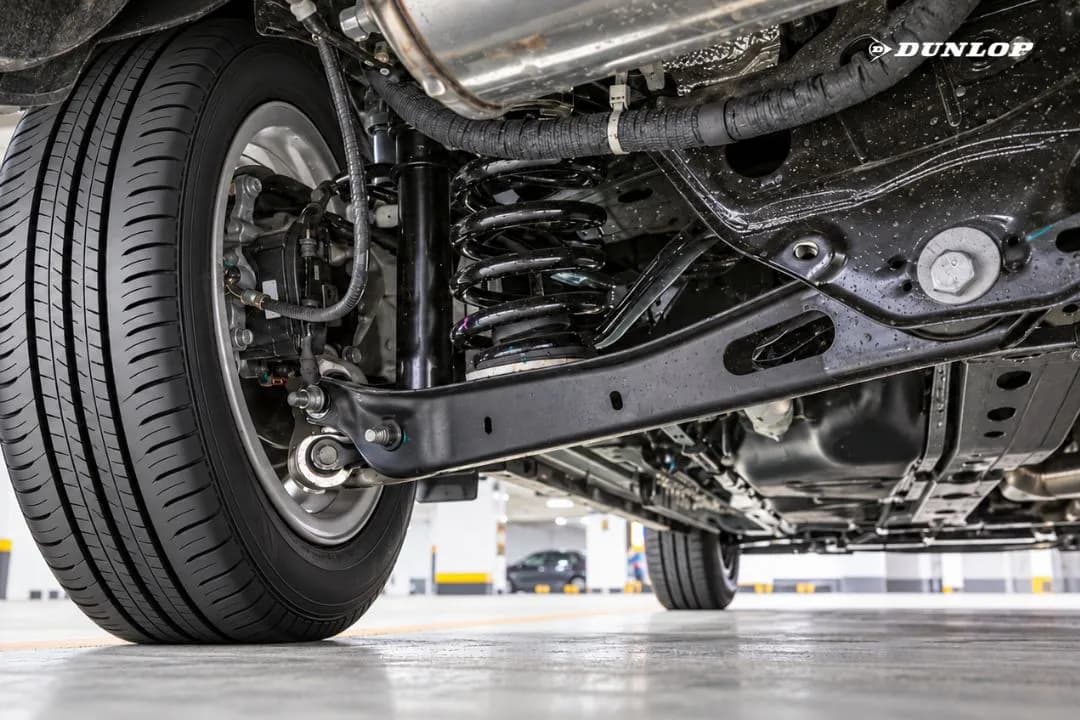
A car's suspension and running gear is the set of components underneath the vehicle that connects the wheels to the body and the steering system. It includes the tyres and wheels, shock absorbers and springs, lower arms and their bushings, ball joints, tie rods, stabiliser links and wheel bearings. Together they support the car's weight, absorb bumps and keep the wheels in position while driving and cornering.
When new, the joints between these components are tight and move smoothly thanks to rubber cushions and lubricant inside them. Age, heavy loads and rough roads gradually change that. Rubber can harden or crack, metal joints start to develop play, and damper oil can leak. These small gaps are what cause knocking when the wheels absorb a bump, which is then heard as noise from under the car.
Types of Suspension Noises and What They Mean
Because each component wears in a different way, the sounds they make also differ. When a noise appears, pay attention to three things: what it sounds like, when you hear it, and which side it comes from.
A Clunk Over Speed Bumps
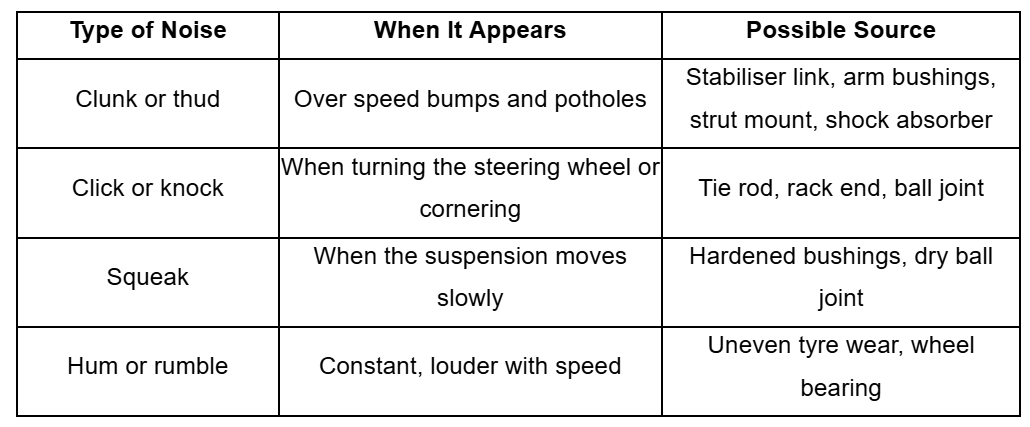
A clunking or thudding sound when the wheels hit a speed bump or pothole indicates that something is loose or its cushioning has worn out. The first suspects are usually the stabiliser link, arm bushings, strut mount rubber or a shock absorber that has lost its damping.
A Clicking Sound When Turning the Steering Wheel
If the noise appears when you turn the steering wheel, especially when parking or turning slowly, the source is likely in the steering system, namely the tie rods, rack ends or ball joints.
A Squeak When the Suspension Moves
If your car's suspension squeaks like a dry door hinge, the sound usually appears when the suspension moves up and down slowly, for example when going over a speed bump at low speed. Common causes are hardened rubber bushings or a ball joint that lacks lubrication.
A Hum That Changes with Speed
A constant hum or rumble that gets louder as speed increases is not triggered by bumps. The source could be unevenly worn tyres or a failing wheel bearing. To tell them apart, listen for changes in the sound when the car moves onto a different road surface, for example from asphalt to concrete. If the sound changes too, the tyres are the first thing to suspect.
The table below summarises the link between each type of noise and the components to check.
Tyre Problems and Uneven Wear
Tyres are rarely suspected because people tend to think they only cause problems when they are punctured or bald. In fact, tyres are the first part to absorb bumps from the road. Unevenly worn tread can cause humming, steering wheel vibration and a less stable feel. These symptoms are often mistaken for suspension damage.
Reading Tyre Wear Patterns
The way the tread wears can give clues about the condition of the suspension. Here are the three most common patterns:
Wear on One Side of the Tread. Tread that is thinner on the inner or outer edge shows that the wheel angle (camber or toe) has shifted. This can be caused by overdue wheel alignment. But it can also be caused by worn bushings, ball joints or tie rods that let the wheel position change while driving.
Cupping. Repeated dips along the tread form when the wheel bounces frequently. Causes include weak shock absorbers or unbalanced wheels.
Wear in the Centre or on Both Shoulders. Wear in the centre indicates overinflation, while wear on both shoulders indicates underinflation. This pattern is not directly related to suspension damage, but it still makes the tyres noisier and less comfortable.
You can read about other wear patterns and how to prevent them in the article Why Do Car Tyres Wear Out Quickly? Here's What to Look For. Meanwhile, wear on one side often leads back to the two components covered next.
Bushings and Ball Joints
Bushings, the Often Forgotten Rubber Cushions
Bushings are rubber cushions at the suspension's connection points, such as the lower arm and stabiliser bar. They absorb vibration and allow movement so that metal parts do not knock against each other. Over time, the rubber hardens, cracks or thins, especially if the car often drives on rough roads or carries heavy loads.
Besides clunking or squeaking, worn bushings make the steering feel less precise and cause the body to sway when braking. On some cars, the noise is more noticeable in the morning when the rubber is still cold, then fades after the car has been driven for a while.
Damaged Ball Joints and Their Risks
A ball joint is a ball-shaped joint that lets the wheel move up and down while still being able to steer. It is protected by a rubber boot filled with grease. When the boot tears, water and dirt get in, the lubricant runs low, and the joint starts to wear.
Signs of a damaged ball joint include clicking when cornering or driving over uneven roads, steering wheel vibration and tyre tread worn on one side. Repairs should not be delayed, because a badly worn ball joint can come out of its socket and leave the wheel without support.
While bushings and ball joints keep the wheels in position, the job of damping the bounce falls to the shock absorbers.
Weakening Shock Absorbers
Shock absorbers dampen the movement of the springs so the car does not keep bouncing after hitting a bump. When the oil inside leaks or the internal parts wear out, the body will keep bouncing for longer after going over a speed bump.
Other symptoms include a thud from above the wheel, a ride that feels too harsh or too soft, the car diving under braking, and oil seeping from the shock absorber body. Also check the strut mount rubber at the top, as damaged rubber can cause noise even if the shock absorber still works.
This condition also affects the tyres. A wheel that keeps bouncing does not stay fully in contact with the road, so grip is reduced and the tread wears unevenly in a cupping pattern. Shock absorbers should be replaced in pairs on the same axle so that damping stays balanced on the left and right.
The next two components are more closely related to steering accuracy and body stability when cornering.
Tie Rods and Stabiliser Links
Tie Rods
Tie rods transfer the steering wheel's movement from the steering rack to the front wheels. On many cars, this assembly is called the long tie rod, which includes the tie rod end and rack end. Besides causing a clicking sound, play in the joints creates a delay before the wheels respond to the steering wheel.
Other easily recognised symptoms are an off-centre steering wheel even when the car is driving straight, and uneven wear on the front tyres. Because they directly affect the car's direction, worn tie rods should be replaced right away, followed by a wheel alignment.
Stabiliser Links
The stabiliser link connects the stabiliser bar (anti-roll bar) to the suspension so the body does not lean excessively when cornering. Both ends have small joints that wear out fairly quickly, making this component one of the most common causes of a knocking sound when driving slowly over uneven roads. The noise tends to be clearer at low speeds and may be almost inaudible at higher speeds. Replacing it is relatively simple compared with other suspension components.
How to Check Your Car's Suspension Yourself
Once you understand what each component does and its symptoms, you can do an initial check yourself. The following steps do not replace a mechanic's diagnosis, but they help narrow down the possibilities.
Start with the Tyres
Park the car on a level surface and check the pressure of all four tyres against the manufacturer's recommendation, which is usually listed on a sticker on the driver's door pillar or in the owner's manual. Then run your hand over the tread and look for areas that are thinner, wavy or feel rough in one direction. Also check the sidewalls for bulges or cuts.
Do a Bounce Test
Press down firmly on the body above each wheel several times, then let go. If the body bounces only once and then settles, the shock absorber is still working well. If the body keeps bouncing or you hear a noise from above the wheel, the shock absorber or its strut mount needs to be checked.
Do a Road Test with the Windows Down
Switch off the audio, open the windows, then drive slowly over speed bumps and uneven roads. In an open car park, turn the steering wheel fully to the left and right. Note the type of noise, when you hear it and which side it comes from. This information will help the mechanic find the source of the problem faster.
Look Under the Car
Shine a torch at the area behind the front wheels. Look for oil seeping from the shock absorber body, torn rubber boots on the ball joints or tie rods, and cracked rubber bushings. For your safety, never get under a car that is supported only by a jack without additional jack stands.
When Should You Go to a Workshop?
If your own check finds any of the following signs, do not wait for the noise to get worse:
- The noise is becoming more frequent or louder over a matter of days or weeks.
- The steering feels loose, vibrates or does not return to centre after turning.
- The car tends to pull to one side even though all four tyres are correctly inflated.
- There is oil seeping from a shock absorber or a torn joint boot.
- The tyres are wearing unevenly even though they have not been used for long.
- The car has just hit a deep pothole or kerb hard.
At the workshop, the mechanic will lift the car to check for play in each joint. After the worn components are replaced, get a wheel alignment and balancing, because replacing tie rods, ball joints or bushings can change the wheel angles. Signs that your car needs this service are covered in the article Car Vibrating or Pulling to One Side? Check Your Wheel Alignment and Balancing!
Frequently Asked Questions About Suspension Noise
Is the car still safe to drive if the suspension is making noise?
As long as the noise is mild and the car still feels stable, it can generally be driven slowly to the nearest workshop. However, if the noise comes with loose steering, strong vibration or the car is hard to control, do not push it. Use a towing service or call a mechanic to your location so the damage does not lead to a loss of control on the road.
Why is the suspension still making noise after a service?
Some suspension symptoms are very similar, so the noise may come from another component that has not been checked yet. Bolts that were not tightened properly after fitting can also be the cause. Bring notes on when the noise occurs so the next inspection can be more targeted.
Can tyres make a car vibrate and noisy?
Yes. Unevenly worn tread, incorrect tyre pressure and unbalanced wheels can cause humming and vibration. You can read the full explanation in the article Noisy Car Tyres? Here Are the Causes and Solutions.
Conclusion
Noise from a car's suspension is a sign that a component is worn or loose. By paying attention to what the sound is like, when it appears and which side it comes from, you can estimate whether the problem lies in the tyres, bushings, ball joints, shock absorbers, tie rods or stabiliser links. You can then describe the problem clearly to your mechanic.
Some suspension symptoms actually start with unevenly worn tyres. That is why checking the tyres is the first step before taking other components apart. If the tyres do need replacing, fix the cause of the wear first so the new tyres do not end up with the same pattern.
For a replacement, DUNLOP Blue Response TG is worth considering if you value a quiet cabin and everyday comfort. This premium touring tyre features a noise-reducing groove design to keep noise down and an advanced polymer compound that maintains stability on both dry and wet roads. For everyday driving that balances comfort, handling and durability, DUNLOP SP Touring R1 is also worth considering.