

Why Do Car Tires Wear Out Quickly? Here’s What You Need to Know!
Have you ever felt that your car tires wear out faster than they should, even though you just bought them? Premature tire wear can be a sign of issues with your vehicle or improper driving habits. If left unchecked, abnormal tire wear not only increases costs but also endangers safety on the road.
Many car owners believe that tire wear depends solely on mileage or product quality. However, other factors such as tire air pressure, wheel alignment, driving style, and vehicle load can also accelerate tire wear.
In this article, we will discuss the different types of tire wear, six common causes of rapid tire wear, how to prevent it, and tips for choosing durable tires to ensure a comfortable and safe driving experience.
Types of Tire Wear
Types of Tire Wear
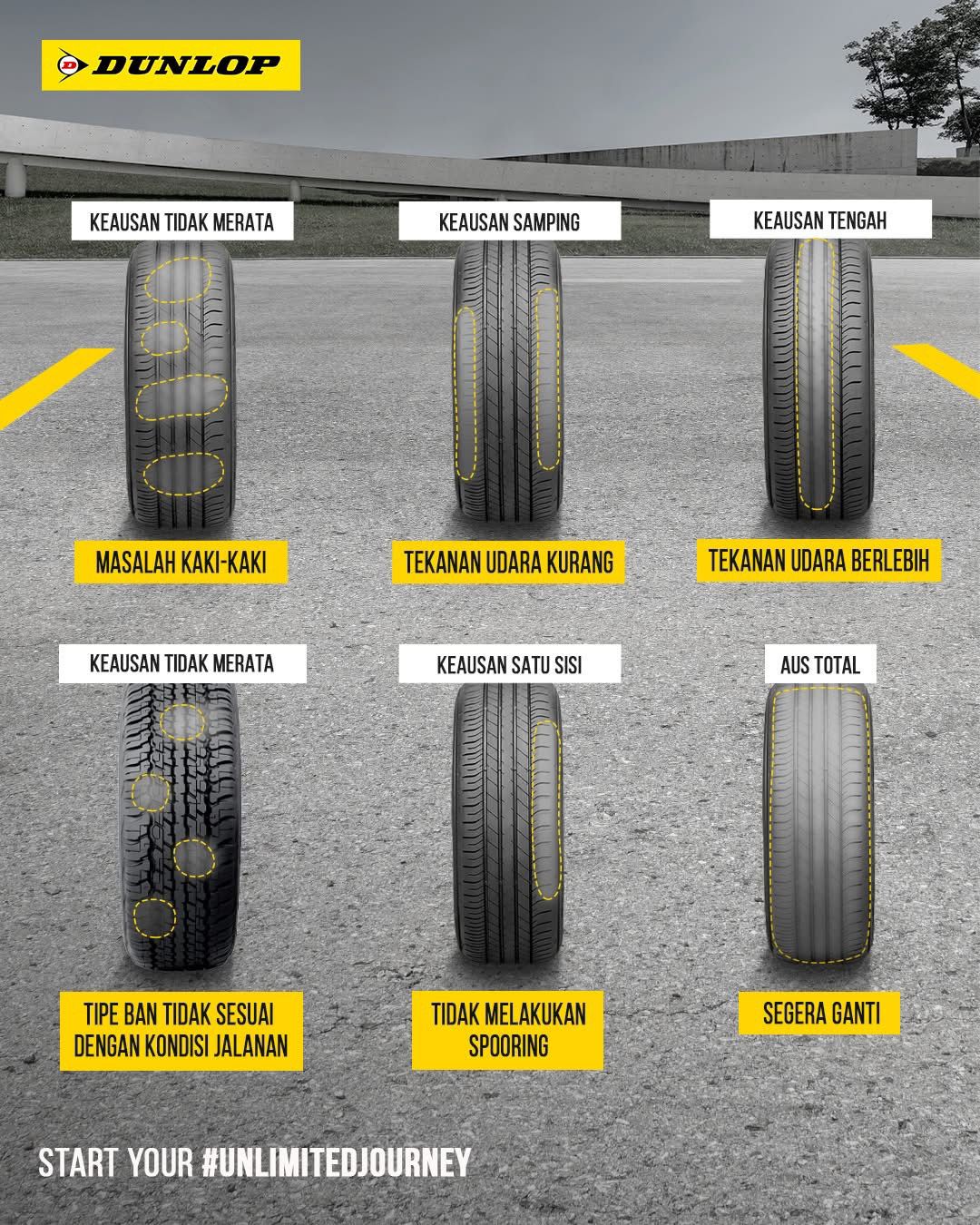
Tire wear does not always occur evenly across the surface. Different wear patterns can indicate problems with the vehicle or non-ideal driving habits. Here are some common types of tire wear:
1. Center Wear
- Characteristics: The tread wears out in the middle, while the outer edges remain thick.
- Cause: Excessive tire air pressure. Overinflation causes the tire to bulge in the center, so only that part touches the road.
- Solution: Make sure the tire pressure matches the manufacturer’s recommended standard.
2. Shoulder Wear
- Characteristics: The outer and inner edges of the tire wear out, while the center remains thick.
- Cause: Tire air pressure is too low, causing the edges of the tire to have more contact with the road.
- Solution: Regularly check and fill the tire pressure as recommended.
3. One-Side Wear
- Characteristics: One side of the tire (inner or outer) wears out faster than the other.
- Cause: Misaligned camber angle due to improper wheel alignment.
- Solution: Perform regular wheel alignment, especially if the vehicle has hit potholes or curbs, and rotate tires periodically.
4. Patchy or Spot Wear
- Characteristics: Irregular wear in patches on various parts of the tire.
- Cause: Wheel imbalance or problematic suspension components.
- Solution: Routinely check wheel balancing and the condition of the shock absorbers.
5. Feathering
- Characteristics: The edges of the tire tread feel rough in one direction, like uneven bird feathers.
- Cause: Incorrect toe angle of the wheels.
- Solution: Perform wheel alignment to correct the toe angle.
6. Cupping or Scalloping
- Characteristics: The tire surface appears wavy, with repeated dips along the tread.
- Cause: Worn or unstable suspension and weak shock absorbers.
- Solution: Replace damaged suspension components, then perform wheel alignment and balancing again.
7. Heel and Toe Wear
- Characteristics: The tread blocks feel blunt on one side and sharp on the other.
- Cause: Commonly occurs on rear tires due to traction and tread pattern.
- Solution: Rotate tires regularly to ensure even wear.
Common Causes of Tire Wear
- Incorrect Tire Air Pressure
- Explanation: Underinflated tires cause the surface of the tire to bend inward, leading the outer edges to wear out faster. Conversely, overinflated tires only press the center area against the road, wearing it out more quickly.
- How to Prevent:
- Check tire air pressure at least once every two weeks, especially before long trips.
- Use a digital or manual tire pressure gauge for accurate readings.
- Follow the manufacturer’s recommended tire pressure (usually found on the driver’s door frame or in the owner’s manual).
- Adjust tire pressure when carrying heavier loads.
- Infrequent Wheel Alignment and Balancing
- Explanation: Wheels that are not properly aligned cause uneven contact with the road, leading to faster wear on one side. Poor balancing causes vibrations, accelerating wear in specific spots.
- How to Prevent:
- Perform wheel alignment and balancing every 10,000 kilometers or after the car experiences hard impacts (such as hitting potholes).
- If you feel vibrations in the steering wheel or notice it is off-center when driving straight, get it checked immediately.
- Use professional workshops with computerized alignment tools.
- Aggressive Driving Habits
- Explanation: Habits such as speeding, sudden braking, or sharp cornering create excessive friction on the tire tread, causing premature edge wear and reducing grip balance.
- How to Prevent:
- Drive at a consistent speed and avoid sudden acceleration or braking.
- Use engine braking in manual transmission cars to reduce braking force.
- Avoid competitive driving on public roads, as it accelerates wear and poses safety hazards.
- Overloading the Vehicle
- Explanation: Carrying loads beyond the car’s capacity puts extra pressure on the tires, leading to uneven air distribution and faster wear, especially on the rear tires. Overloading also increases the risk of tire blowouts due to excessive internal stress.
- How to Prevent:
- Check the load index on the tire specifications and ensure the total vehicle load does not exceed it.
- If you frequently carry heavy loads, consider tires with a higher load capacity.
- Avoid carrying passengers and cargo beyond the recommended limit, especially in smaller vehicles.
- Road Conditions and Terrain
- Explanation: Potholes, rocky surfaces, and uneven roads can cause physical tire damage, such as tears, uneven wear, or bulges. Hot and rough roads also accelerate tread abrasion.
- How to Prevent:
- Avoid driving at high speeds on damaged roads.
- If you frequently drive on extreme terrain, use tires designed for extra durability, such as those with thicker sidewalls.
- Maintain suspension and damping systems to minimize stress on the tires when encountering rough roads.
- Failure to Rotate Tires
- Explanation: Front and rear tires wear differently. For example:
- Front-Wheel Drive (FWD): Front tires wear out faster because they handle both steering and traction.
- Rear-Wheel Drive (RWD): Rear tires wear faster due to handling traction, while front tires manage steering.
- All-Wheel Drive (AWD): Wear is distributed more evenly, but all tires still need regular rotation to maintain balance.
- How to Prevent:
- Rotate tires every 10,000 kilometers or as recommended by the manufacturer.
- Follow the correct rotation pattern:
- FWD:
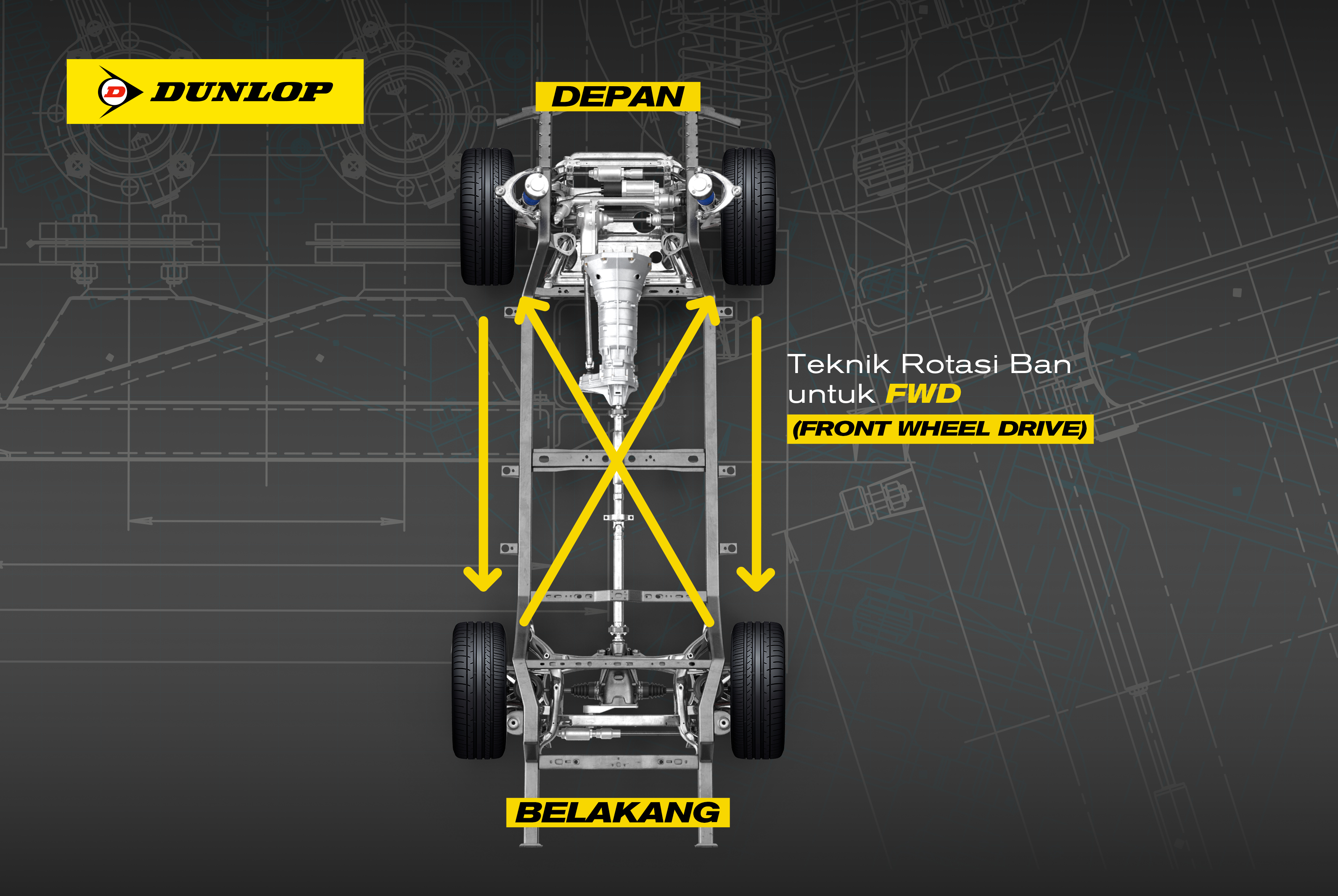
Move front tires straight to the rear and cross the rear tires to the front. - RWD:
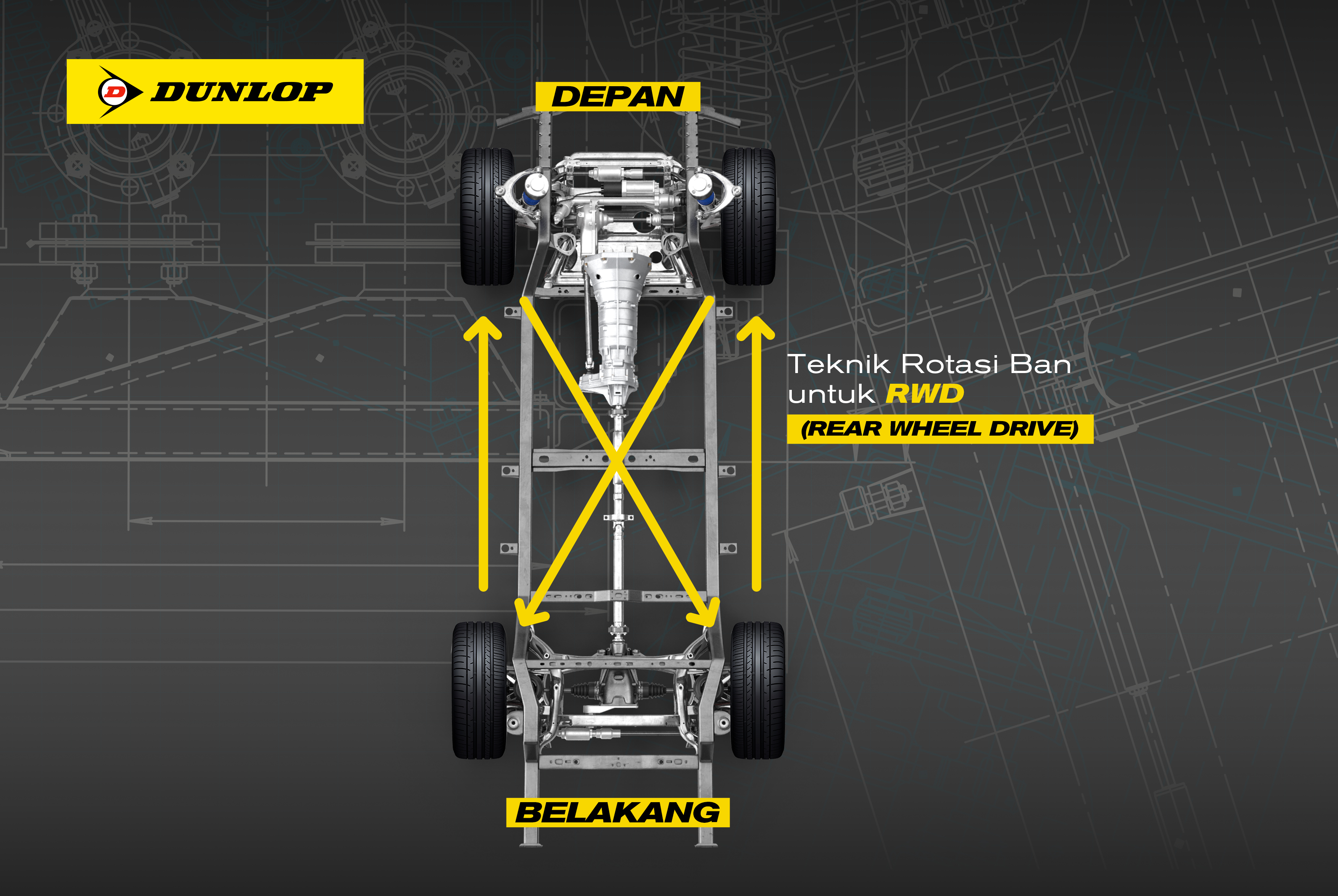
Move rear tires straight to the front and cross the front tires to the rear. - AWD:
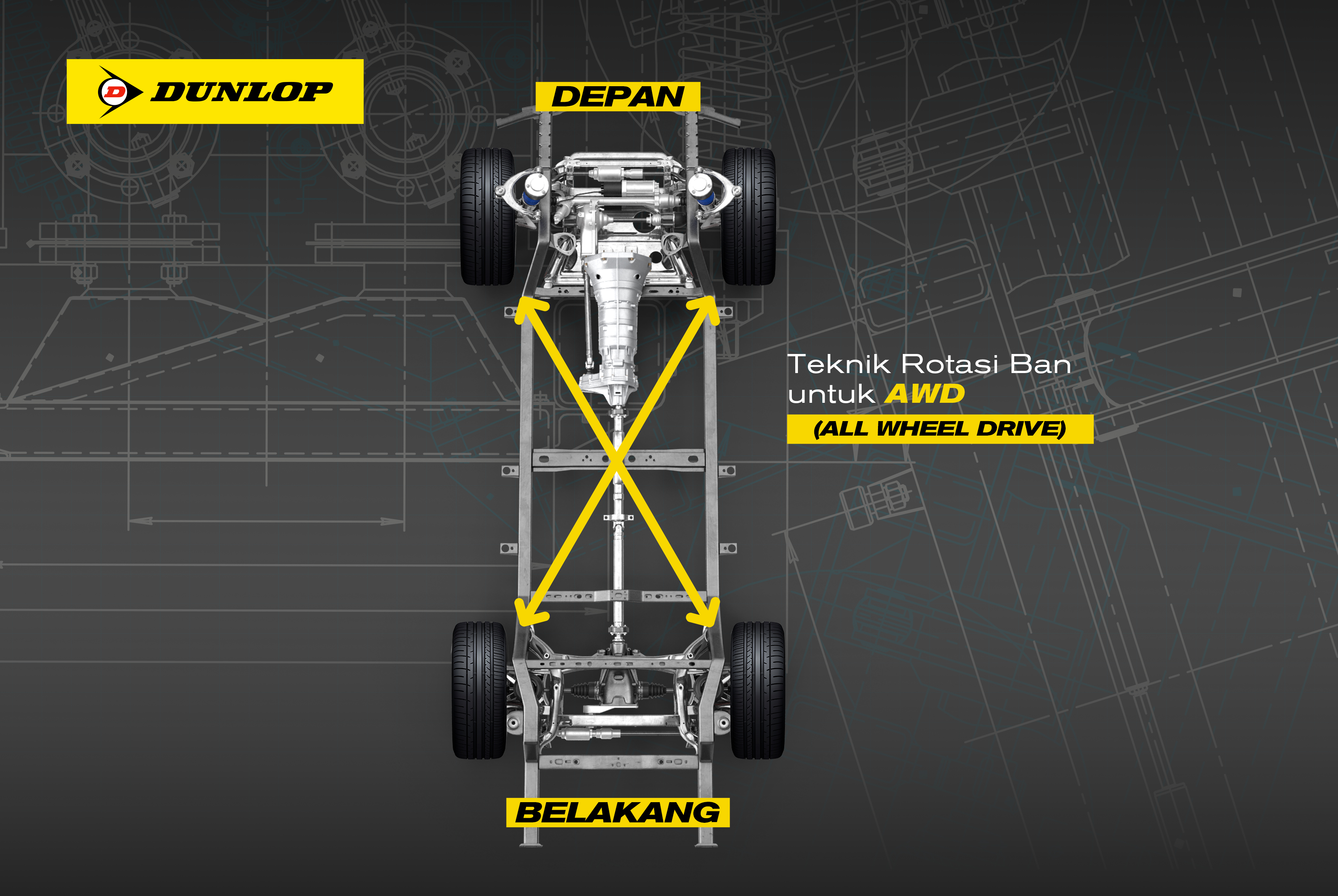
Use the X-pattern (all tires are crossed).
- FWD:
- Rebalance tires after rotation for optimal comfort.
- Explanation: Front and rear tires wear differently. For example:
Additional Tips: Signs Your Tires Need Replacement
- Tread depth has reached or is below the Tread Wear Indicator (TWI) of 1.6 mm.
- Visible bulges or cracks on the tire sidewall.
- Unusual vibrations or instability while driving.
- Frequent unexplained air loss.
Conclusion
Premature tire wear can become a serious problem if not addressed. Causes range from incorrect tire pressure and aggressive driving to poor maintenance such as skipping tire rotation and wheel alignment. With proper care and high-quality tires, you can extend tire life and save money over time.
Always use tires that meet your vehicle’s requirements and check them regularly. With Dunlop tires, you get quality, durability, and comfort in one package. Visit the Dunlop website to explore premium tire options and find the nearest Dunlop Shop in your area today!