

Tips for Safely Going Downhill with an Automatic Car
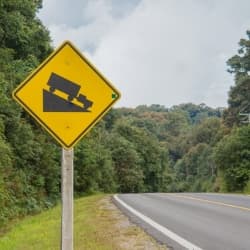
Driving an automatic car requires different skills than a car with a manual transmission. There are special tips that must be mastered to traverse certain road terrain. One of them is when passing derivatives.
Decreasing road conditions require special attention. Caution needs to be increased. In fact, more caution is needed if the descent is very steep.
However, in reality drivers often ignore it. They tend to be more alert when going uphill. In fact, the accident rate on derivatives is higher.
So, to avoid unwanted incidents, mastery of techniques for passing safe descents is necessary. Especially for automatic car drivers who cannot control the transmission with the clutch.
Insufficient Reliance on Brakes
When going downhill, the car will tend to go faster. Apart from the impact of pressing the gas pedal, there is additional speed from the downhill road. Therefore, the speed needs to be controlled properly.
To do this, the automatic car driver can step on the brake pedal. However, if the descent conditions are very steep, relying on the brakes alone will not be enough.
For example on a long steep descent. The brakes can be pressed. However, if done continuously, there is a risk of vapor lock or a condition where the brakes become hot so that the brake fluid boils. When that happens, the brake fluid will create water vapor which can cause the brakes to fail.
This is clearly dangerous. Therefore, there needs to be additional “strength” to adjust the automatic speed when passing long steep descents.
Use Engine Brake
To safely navigate steep downhill roads, automatic car drivers are advised to use engine brake assistance. This will help ease the work of the brakes in reducing vehicle speed.
Engine braking is a technique for slowing down a car's speed by relying on engine rotation when the transmission is lowered to a lower gear. This is very effective in helping braking by up to 50%.
Performing an engine brake is actually very easy. Just lower the transmission gear. However, this method is easier to do in a manual car. For automatic cars, you need to master special techniques when doing this because you don't need to shift gears.
Even so, in principle, engine braking can still be done in automatic cars. However, the implementation is different compared to manual cars. Apart from that, the driver also needs to look at the type of automatic transmission in his car so that the engine braking technique used is really correct.
It should be remembered that, in general, there are two types of automatic transmission, namely conventional AT transmission and CVT. The engine brake technique in both is different so it must be understood.
In an automatic car with a conventional AT transmission, engine braking can be done by downshifting from D to 2. When shifted, the car's speed will definitely slow down. This will help with braking.
However, if it still feels insufficient, additional engine braking can be continued by shifting to L gear. It's just that the shift must be done gradually from D to 2 and then to L.
In addition to shifting to 2nd and L gears, conventional automatic cars can also brake the engine by pressing the Over Drive (OD) button. OD is useful for moving the transmission to low gear
When activated, the OD will give a command to hold the transmission in a lower position. In this way the engine brake also works. However, the driver must turn it off when he wants to drive normally again.
Meanwhile, the technique for engine braking in CVT automatic cars is different. The driver can do this by adjusting the paddle shift.
When going down a steep downhill road, the driver can shift gears by playing with the transmission lever or via the paddle shift lever located behind the steering wheel. The working principle is similar to reducing gears in a manual car. The move to a low level is carried out gradually.
It is important to remember, shifting gears must be done when the vehicle is slow or when the Revolutions Per Minute (RPM) is at a low level. This step will further ensure safety for the car engine.
Combine engine braking with pressing the brake. So, the speed of an automatic car on steep descents will definitely be controlled well.